Post 13A · Engineering Authority
One lime plant. Two kinds of dust.
Lime plants — kiln dust and hydrator dust need different filter media
0 comments on this post.
For lime plants
One lime plant. Two kinds of dust.
They should not share a filter bag.
What we make for lime.
For the cooler, damper duties. Finished against moisture with oil-and-water repellence or PTFE impregnation.
For the hot gas coming off the kiln.
Laminated onto either, where fine, sticky dust has to release cleanly on every pulse.
350–900 GSM · singed, calendered or heat-set to the duty
Talk to our technical team.
Caption
A lime plant makes two kinds of dust, and a filter bag that suits one of them will struggle with the other.
At the kiln, the dust leaves with hot, dry gas. It is fine, it is alkaline, and it reaches the baghouse still carrying a good deal of the kiln's heat. The question the filter media has to answer there is mostly a thermal one: will the fibre keep its strength and its shape, day after day, at the temperature the gas actually runs at, rather than the temperature written on the drawing.
Further along, where quicklime meets water in the hydrator, the problem changes completely. The gas is cooler, but it is full of water vapour, and hydrated lime turns sticky the moment it finds moisture. Instead of building a cake that lets go when the bag is pulsed, the dust works its way into the felt and stays there. The pressure drop climbs, the cleaning system pulses harder and more often to keep up, and the bags wear out long before anybody expected them to.
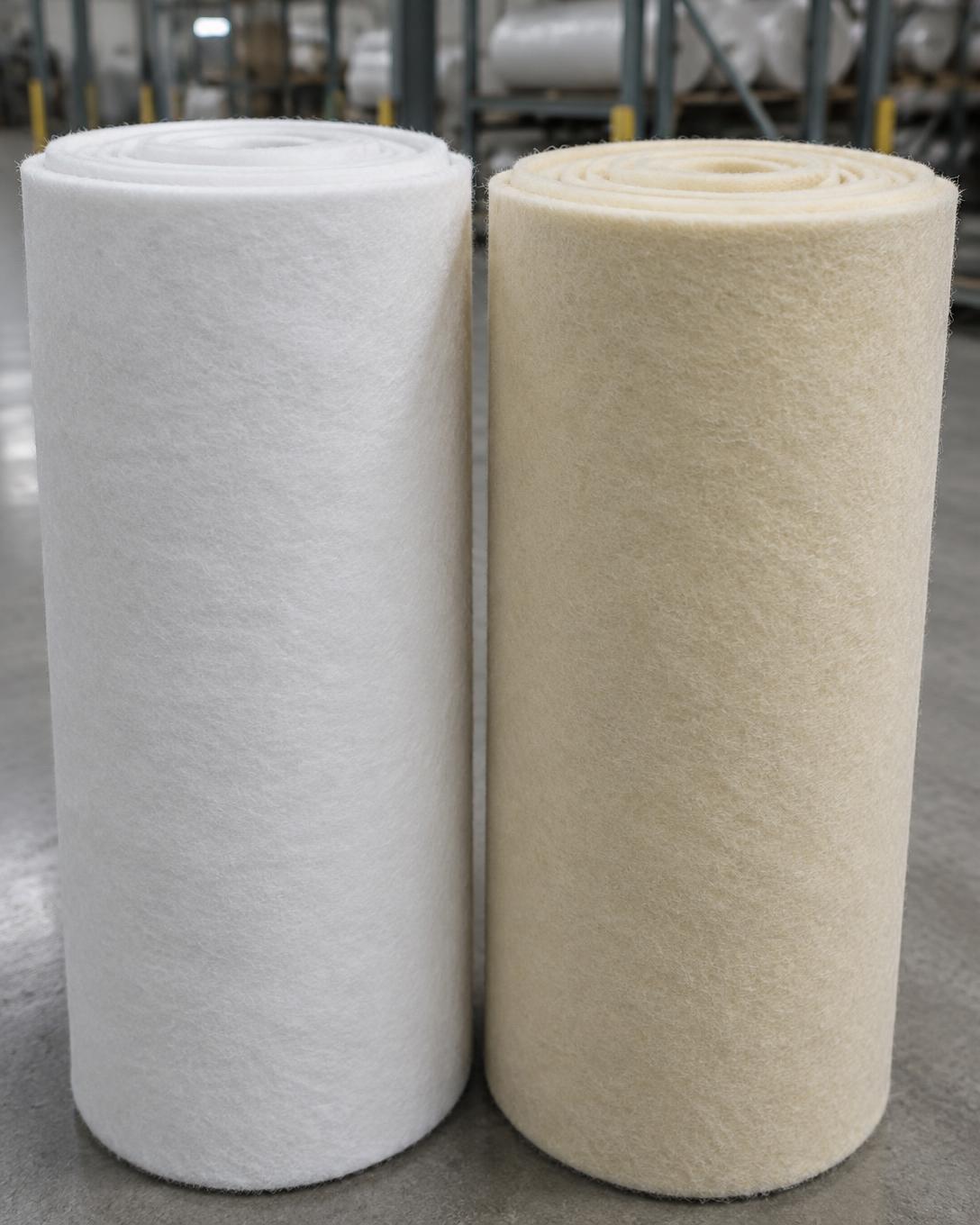
This is why we do not treat lime as a single specification. For the hot duty at the kiln, we make meta-aramid felt, which is built to hold up under sustained heat. For the cooler, damper duties, we make polyester felt and finish it for the conditions it will meet, with an oil-and-water repellent treatment or PTFE impregnation, so that moisture and sticky dust have far less to hold on to.
And on either of them, where the dust is especially fine or especially sticky, we laminate an ePTFE membrane onto the surface. The membrane changes the way the bag filters. The dust collects on top of the membrane instead of travelling into the depth of the felt, which means it comes away cleanly when the bag is pulsed, and the bag keeps breathing for longer.
All of this is made in our own plants, from felt we needle-punch ourselves, in weights from 350 to 900 GSM, and finished (singed, calendered or heat-set) to suit the duty it is going into. Tomorrow we will show you what happens to every batch of it in our laboratory before it is allowed to leave.
If you run a lime plant and your bags are not lasting as long as they should, tell us where in the plant they are failing. That single piece of information is usually the most useful thing anyone can give us.
Talk to our technical team.
#LimeIndustry #NeedleFelt #FilterBag #BagFilter #DustFiltration #MiddleEast