Post 12 · Engineering Authority
It has been telling you for months
How to read a pressure-drop trace
0 comments on this post.
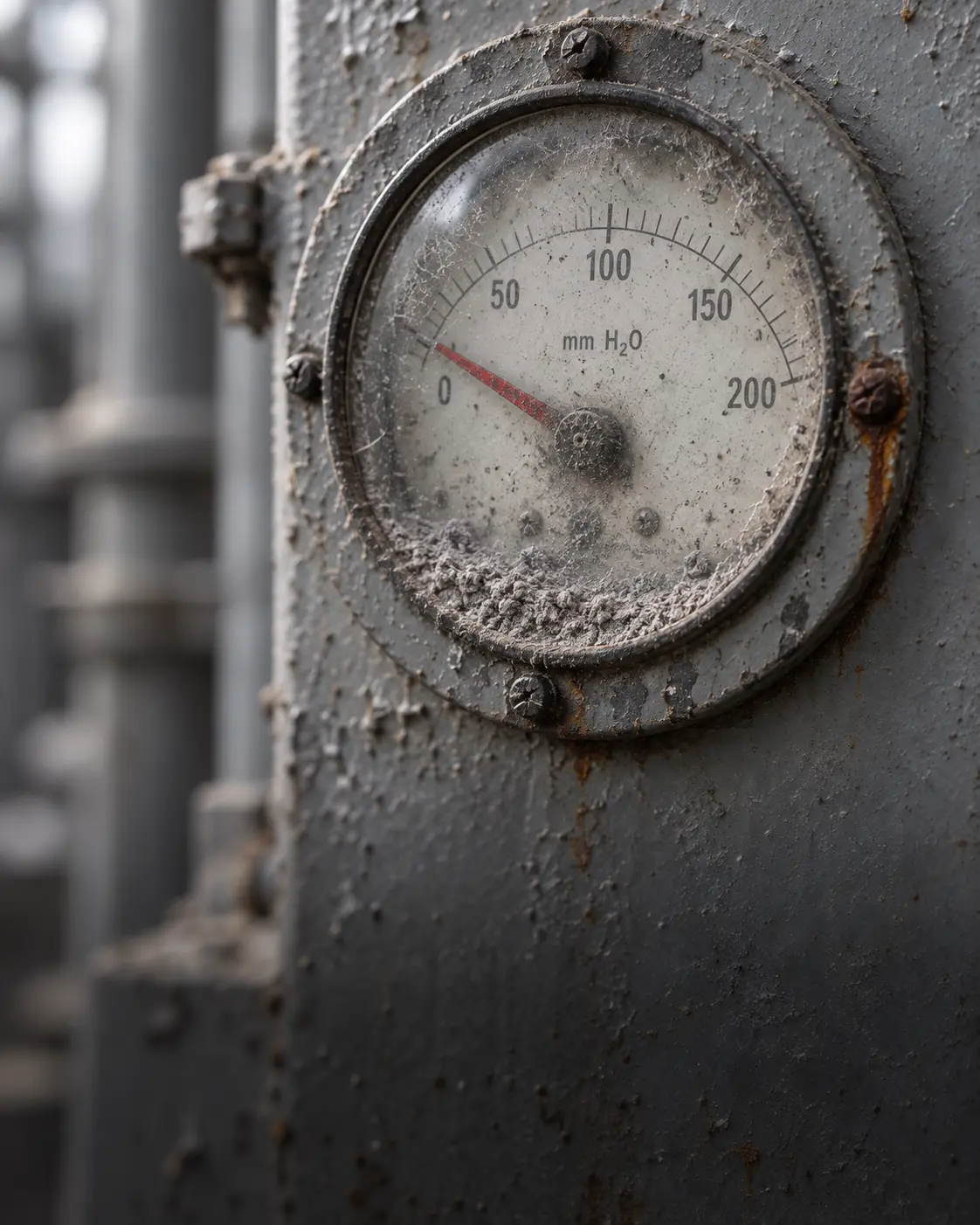
It has been telling you.
For months.
Four things it might be saying.
Talk to our technical team.
Caption
Pressure drop is not a problem. It is a sentence, and most plants never get around to finishing it.
There are four patterns worth knowing, and each one points at a different part of the system.
The first is a reading that climbs steadily and never fully resets after a cleaning cycle. What that usually means is that the dust cake is not releasing properly, and the cause is far more often moisture and dew point than anything to do with the media itself. The bags are being blamed for something happening in the gas stream.
The second is a trace that spikes and then recovers, with the baseline staying flat underneath. That pattern says the media is doing its job. Look instead at the cleaning system — pulse pressure, pulse duration, and how often the cycle is running.
The third is the one that gets misread most often, because it looks like good news. A pressure drop that is low and falling on an otherwise stable process usually means gas is getting through somewhere it should not be. A split bag, a failed seal, or a cage that has worn its way through the media. Somebody is usually pleased about the falling number for several weeks before anyone works out what it means.
The fourth is a flat trace with a single step change in it. Something mechanical happened on the day of that step — a compartment isolated, a valve failed, a damper moved. The bags are very rarely the cause of a step.
None of this replaces a proper failure analysis, and it is not meant to. What it does is tell you which of the four conversations to have first, and in our experience that is usually worth about a fortnight of guessing.
The gauge has been saying one of these four things for months. It is worth going and looking at it.
Talk to our technical team.
#IndustrialFiltration #Baghouse #DustCollection #PredictiveMaintenance #AirPollutionControl