Post 11 · Customer Outcomes & Applications
Same plant, different fire
Cement — why the kiln and the cooler should not share a specification
0 comments on this post.
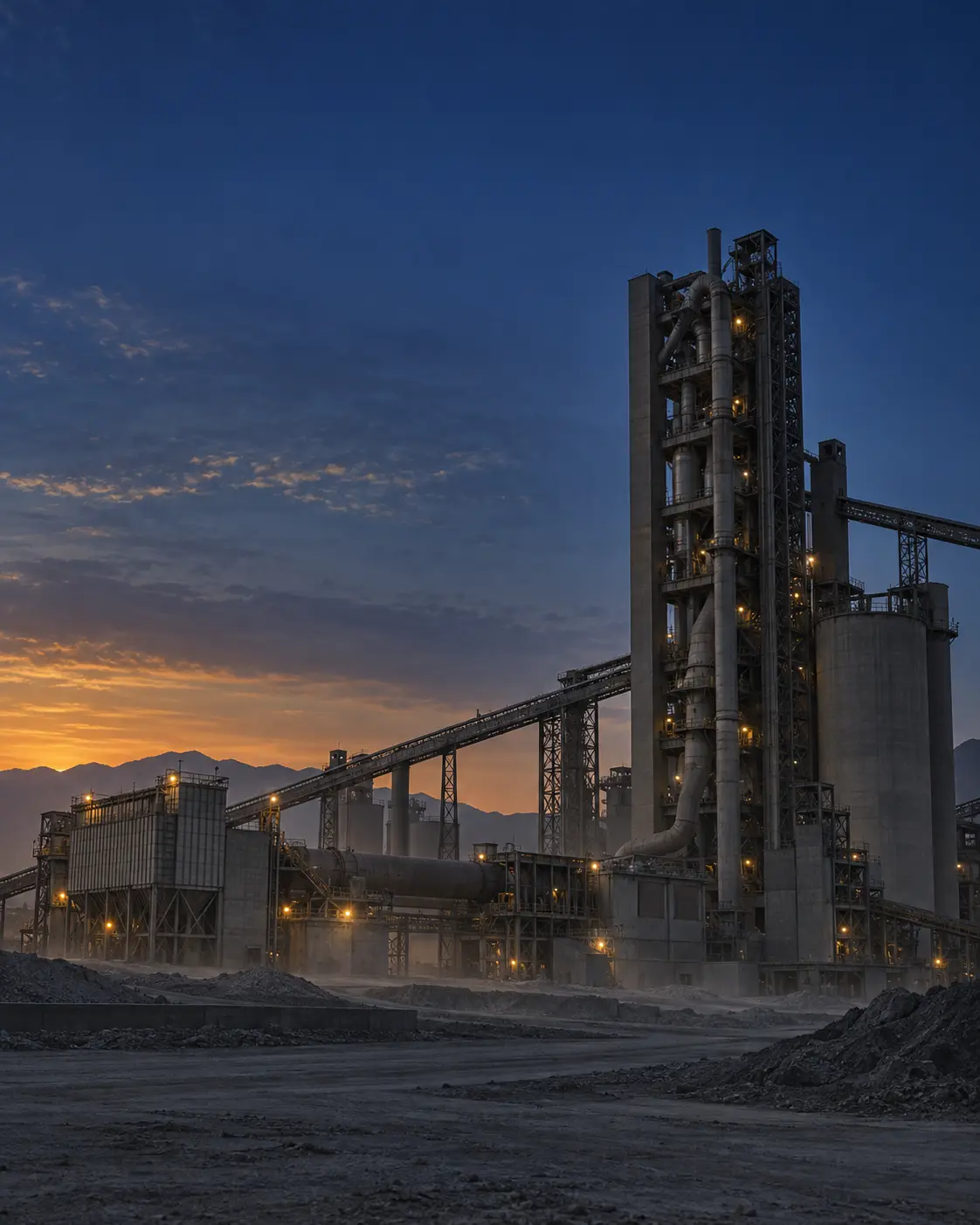
Same plant. Different fire.
The kiln and the cooler should never share a specification.
Caption
Two baghouses, one purchase order. That is usually where the money quietly leaves.
In a cement plant, the kiln and raw mill side and the clinker cooler are two genuinely different filtration problems that happen to sit inside the same fence, share the same maintenance budget and, more often than not, get bought on the same tender.
The kiln and raw mill side runs hot and chemically aggressive. There is alkali and sulphur in the gas stream, and the moisture profile shifts around depending on what is in the raw mix that week. What ages the media there is chemistry.
The clinker cooler is a different environment altogether. It runs in a different temperature band, the dust is far coarser and much more abrasive, and the thermal excursions tend to arrive without much warning. What ages the media there is mechanical wear and sudden change.
If you buy one specification for both of them, you have not optimised for either. In practice what happens is that one of the two baghouses is quietly subsidising the other one's bag life, and the maintenance team is usually the last group of people to find out which one it is. The conversation that follows is about bag quality, when it should have been about specification.
There is no catalogue that settles this. What settles it is four questions, asked separately for each baghouse: what is the continuous temperature and what is the excursion peak, what is the dust chemistry doing between cleaning cycles, does the gas pass through its dew point, and does the cage geometry actually match the bag.
If both of your baghouses are running the same specification because that is simply how the tender was written, it is worth reopening before the next campaign.
Talk to our technical team.
#CementIndustry #IndustrialFiltration #Baghouse #DustCollection #AirPollutionControl